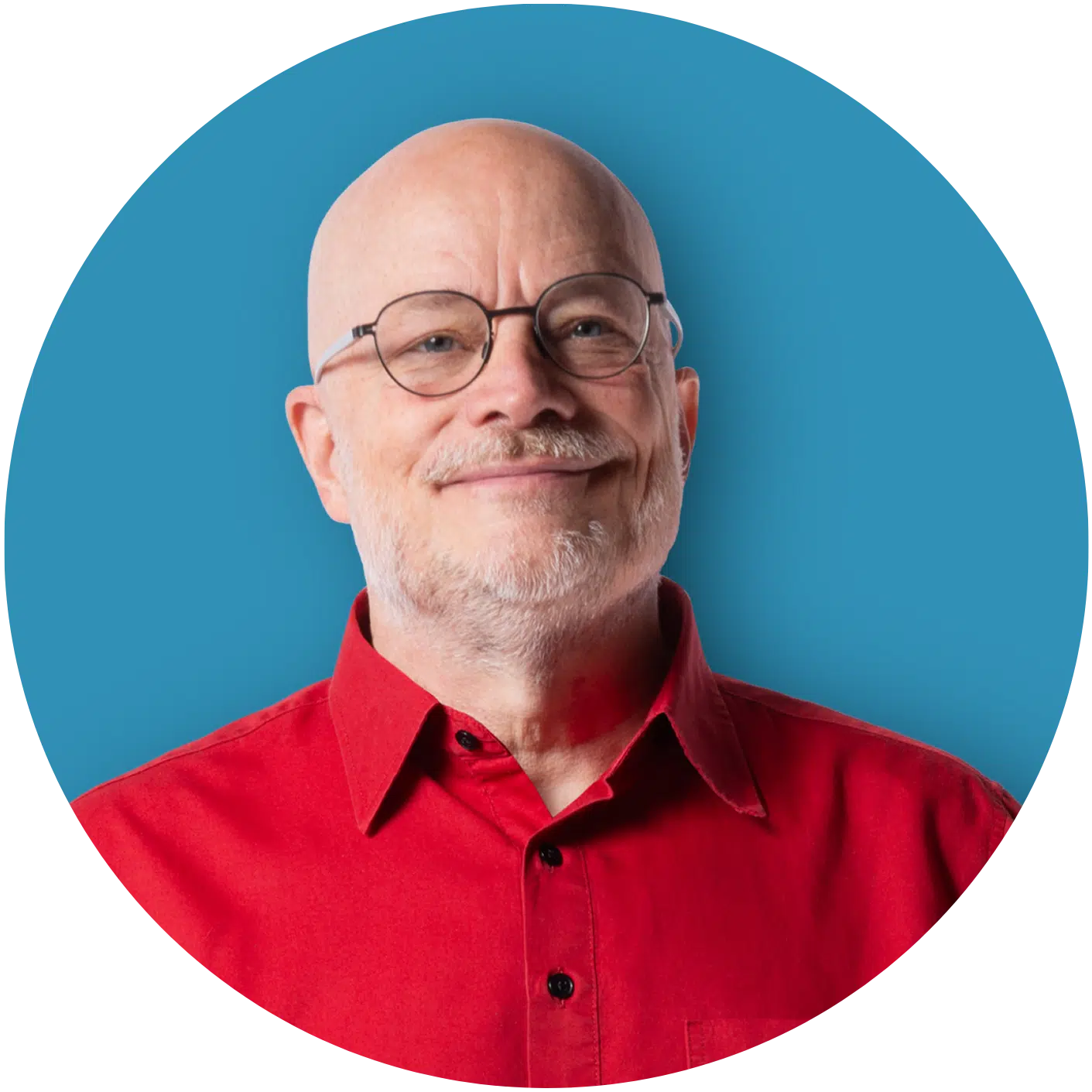









How Can Entrepreneurs Scale Their Business by Staying in Their Zone of Genius and Letting Go of the Rest? - Jason Barnard on the COO Solution Podcast
The Secret to Scaling Your Business Without Losing Your Headspace | Jason Barnard
Video by: Derek Fredrickson. Host: Derek Fredrickson. Guest: Jason Barnard, Founder and CEO of Kalicube®. August 5, 2026
TL;DR: Jason Barnard scored 10 out of 10 for innovation and detail, and 1 out of 10 for organizing people and leading teams. He had been running Kalicube by training himself to do the work he was worst at, and it was working well enough that he never stopped. This conversation with Derek Fredrickson at The COO Solution is about what changed when Jason finally let go of the things that were not his zone of genius, why headspace is more valuable than time or money, and how the same logic that drives Kalicube’s work for clients turned out to apply directly to how Jason needed to run his own business.
Key strategies discussed:
- Zone of genius is the only sustainable operating model for a founder. Jason’s zone of genius is two things that rarely go together: big ideas and tiny details. For building a platform like Kalicube Pro™, those are exactly the two things needed. Everything in between, organizing people, leading teams, implementing projects, was work he had trained himself to do and was doing well enough. But doing it well enough was the ceiling. Breaking through the million-dollar ceiling requires putting the right people in the right seats, not training yourself to cover every seat.
- Headspace is more valuable than time or money. This is Jason’s direct takeaway from working with a fractional COO. Even when the time saved is modest, the headspace freed up is transformative. If you are thinking about team problems, production delivery, and operational structure during the day, that cognitive load is stealing from the work only you can do. Paying someone else to carry that load is not an expense. It is the investment that makes everything else more efficient.
- “It’s not your problem” is the hardest lesson for a founder to internalize. Jason has a poster in his office that says exactly that. It took him ten years to actually believe it. The production team was always brilliant at delivery. He did not need to watch it. Gemma, his fractional COO, now holds that. Jason’s job is to see what should happen, articulate it clearly, and hand it over. Not to implement it.
- The parallel between what Kalicube does for clients and what a fractional COO does for founders is exact. Kalicube takes the weight of brand management off a founder’s shoulders, handles it better than the founder was handling it, and frees up headspace for the work that actually moves the needle. A fractional COO does the same thing for operations. In both cases, the founder gets to stop doing work they were never the best person to do, and the business moves faster as a result.
- Brand visibility in AI is what AI says about you when you are not in the room. Every potential client, partner, or hire researches you before they engage. What Google, ChatGPT, and Perplexity say about you at that moment either confirms the deal or seeds doubt. Most founders do not know what the machines are saying about them. And the ones who do check it often check it on their own logged-in account, which shows them a flattering, personalized version that no one else is seeing. The gap between what you think the machines are saying and what they are actually saying to your prospects is where revenue leaks.
- The velvet rope principle applies to how you present your offer, not just what your offer is. Bob Gentle pointed out to Jason that Kalicube’s AI audit was 100 times better than anything he had built, but Jason was presenting it as a factual report. Bob’s insight: people need to feel that the velvet rope is being pulled back for them personally. They need to feel special about what they are receiving. The information inside the audit is not enough on its own. How the audit makes someone feel about their position and their opportunity matters as much as the accuracy of the data inside it.
Why Headspace Is Worth More Than Time or Money
Jason Barnard scored 10 out of 10 for innovation and detail. He scored 1 out of 10 for organizing people and leading teams. For years, he had been running Kalicube by training himself to do the work he found hardest, and it worked well enough that he never stopped.
In an episode of The COO Solution Podcast, published August 5, 2026, host Derek Fredrickson talks with Jason Barnard, founder and CEO of Kalicube and a client of The COO Solution, about what changed when he finally let go of the work outside his strengths. Their conversation covers zones of genius, why headspace matters more than time or money, and how the logic behind Kalicube’s work for clients turned out to apply directly to how Jason Barnard runs his own business.
Jason Barnard has built businesses around what he loves for more than 30 years.
Fredrickson began with Jason Barnard’s story. After a degree in economics at the University of Liverpool, Jason Barnard moved to France in 1988 and stayed. He fell in love, joined a band as a double bass player, and started a family. He still lives in the south of France, still plays music, and admits that traveling back to the UK isn’t his favorite thing to do.
Kalicube, founded in 2015, is his third business. He started the first in 1991, running a record company while playing in the band. By his account, all three have been profitable and all three have survived. But, as Fredrickson put it in his introduction, none of them were run quite the way a CEO would run them. That was about to change.
What AI says about you is what a trusted friend says about you.
Fredrickson asked what was going well at Kalicube before they started working together. Jason Barnard began with the work itself.
Kalicube helps companies and entrepreneurs shape how they are described in search and AI. As Jeff Bezos would say today, your brand is what Google and AI say about you when you are not in the room. We all research the people and companies we plan to work with, Jason Barnard points out. But few of us think about what others see when they research us. It is often surprising.
He explains why it matters. When someone asks ChatGPT, Google or Perplexity about a person, it is because they trust those tools, almost like a trusted friend or partner. If the answer is flat, such as “he runs a company and does chief operating officer work,” the person isn’t convinced. A prospect who was ready to buy doesn’t convert. And the business never knows it happened.
Jason Barnard used to argue with people who thought a reasonable description was good enough. He has stopped, because some people genuinely are happy with okay. But his own standard is higher. What AI says about you should match what you would say yourself, or what your best client would say. If it doesn’t yet, that is worth working toward, because it helps clients choose you. The same applies to a person and to a company.
He also shared the recognition he values most. He was hired by Google to speak on the future of AI Search and how brands win at organic optimization. For him, Google inviting him to share these ideas with its own audience is the ultimate accolade.
Jason Barnard was running his company against his own character.
Then came the harder part. Jason Barnard explains that he had been running Kalicube against his own nature. He had trained himself to act as a COO, the person who organizes the team, and he was doing it reasonably well. But it wasn’t where he was happiest.
His happy place is inventing: working out how to help AI describe his clients accurately and building the machinery behind it. Kalicube Pro, the platform behind Kalicube’s work, holds 25 billion data points, and he writes the algorithms himself. “It’s my brain codified,” he said, backed by data collected from Google, ChatGPT and other AI systems.
Meanwhile, he had convinced himself he could do everything else too: run the company, lead the team, make sure everything got done, look after the accounts. And he was. The company was thriving. But across all three businesses, he realized, he had always been doing work he didn’t enjoy and wasn’t necessarily best at.
One test showed how lopsided his strengths were.
The turning point came from a test, recommended by a friend, that measured what he was naturally comfortable doing. He scored 10 out of 10 for innovation and detail, and 1 out of 10 for organizing people and leading teams.
His first reaction was that he could do all of those things. The person running the test agreed: he could do them, but he wasn’t comfortable doing them. He had trained himself to.
That was the moment Jason Barnard decided to let go of organizing and implementing, and to focus on what he does best.
He now focuses on three things he loves.
Today, Jason Barnard is responsible for three things at Kalicube, and he enjoys all of them:
- Speaking at conferences.
- Spending time with entrepreneurs, including through the Entrepreneurs’ Organization, where he and Fredrickson are both members. He finds it helpful as an entrepreneur, and it puts him in conversation with exactly the kind of people Kalicube serves.
- Inventing and building: creating new ideas, filing patents, writing academic papers and developing the Kalicube Pro platform.
That, he says, is how it should be, and what he has been working toward for 35 years.
Breaking through a growth ceiling means the right people in the right seats.
Fredrickson highlighted the key point: Jason Barnard could do all those other tasks, and was doing them somewhat successfully. The breakthrough was realizing that bringing in people for whom that work is their zone of genius would free him to focus on what moves the business forward.
Jason Barnard describes it in terms of the well-known million-dollar ceiling. At some point, a founder has to accept that they can’t keep doing work they aren’t naturally gifted for. To grow well beyond that ceiling, a business needs the right people in the right seats: people who enjoy the work and will be highly successful at it.
His own results were lopsided. Big ideas and tiny details are his two greatest strengths, and they happen to be exactly what building a platform like Kalicube Pro requires. When he saw that, he realized he should be building the platform and speaking, not spending time on work where he wasn’t performing at his best.
Headspace is worth more than time or money.
The biggest lesson Jason Barnard has taken from working with a fractional COO is about headspace. “Headspace is the most valuable thing in the world to me. It actually isn’t time and it isn’t money, it’s headspace,” he said.
He will pay well to get it. Even when he doesn’t get much time back, regaining headspace lets him do far more with the time he has. Worrying about team problems, delivery and structure during the day takes mental energy away from the work only he can do. Handing that load to someone else isn’t just a cost, in his view. It makes everything else more effective.
The same logic applies to how founders handle their reputation in AI.
Jason Barnard sees a direct parallel with Kalicube’s own work, and it is becoming one of his key messages.
Many entrepreneurs tell him they look after how they appear online themselves. He believes they are probably doing a reasonable job, but rarely the best possible one. More importantly, it takes up their headspace. They think about it during the day, when that attention could go to winning clients, meeting more people or running the business better.
For executives, Kalicube takes the work off their shoulders entirely. It handles their executive digital brand in search and AI, so they no longer need to think about it. For companies, Kalicube carries the thinking: deciding what matters, in what order, and whether it is working. The company’s own team does the implementation.
Either way, Jason Barnard explains, the point is the same as hiring a COO. The work gets done well by people who know what they are doing and enjoy it, and the founder keeps their headspace for their own zone of genius.
Fredrickson summed up the parallel: you could do it yourself, but that doesn’t mean you should. When founders free their headspace, work becomes exciting rather than something to dread. Jason Barnard added that it moves the business forward, makes life and work more enjoyable, and makes money. “What’s not to like?” he said.
“It’s not your problem” took ten years to believe.
Jason Barnard has a poster in his office that reads: “It’s not your problem.” It was a Christmas present from a friend who had been the singer in his band and later worked with him in Kalicube’s early days. It took Jason Barnard ten years, he says, to truly believe it.
He gives an example. Friends have told him they are implementing EOS, the Entrepreneurial Operating System, themselves. One of them is two years in, and it is going “okay.” Jason Barnard didn’t want that. Instead, Gemma, his fractional COO from The COO Solution, came in and put the structure in place efficiently. He hasn’t had to learn how EOS works. “It’s not my problem,” he said.
The same goes for production. Kalicube’s production team has always been excellent at delivery, he says. He no longer needs to watch over it, because Gemma does.
Handing over the work makes room for better ideas.
Jason Barnard shared a recent example of how this works in practice. Kalicube already had a strong AI audit. Then his friend Bob Gentle suggested it could be better.
According to Jason Barnard, Bob Gentle told him the audit was far stronger than anything he had built himself, but that it was presented as a factual report. Bob Gentle’s own audits succeed, he said, because he makes people feel special. He calls it the velvet rope: as you go through the audit, it feels as if the rope outside an exclusive club is being pulled back just for you. The information alone isn’t enough. How the audit makes someone feel about their position and their opportunity matters just as much.
Jason Barnard loved the analogy. He spent 45 minutes talking it through with Bob Gentle, sent the recording to his team, and met Gemma the next morning to decide who would be responsible. Then he handed it over. In about a month, he expects a new and better audit, without having to manage the project himself.
A visionary founder can become their own bottleneck.
Fredrickson asked what had changed most in the four or five months they had been working together. Jason Barnard’s answer was simple: he is now doing what he is here to do.
He shared a candid example. A month or two in, Gemma told him she had been getting the team to handle things without coming back to him whenever possible. Every time she asked him something, she noticed, he spent three days on it, exploring new ideas and possibilities that went beyond the original question.
Jason Barnard recognized it immediately. He had been a bottleneck for himself. Gemma learned quickly which questions genuinely needed him and which the team could decide alone, partly by asking the team which decisions he was holding up. A month earlier, he says, the bottleneck was about 50 percent resolved. Now he would put it at around 80 percent.
Fredrickson described this as what a great integrator does: protecting a visionary founder’s time, energy and focus, so that creative energy goes where it adds the most value.
Freed-up headspace has already turned into new work.
The results show up in what Jason Barnard has achieved in a short time. Over the previous six to eight weeks, he had taken the Kalicube Pro platform to a place he is proud of. He had worked on new inventions to add to his 17 patent applications, writing them up properly for a patent lawyer to review. And his third academic paper was under review.
He calls it an incredible amount of work, and says it happened because the bottleneck had been removed.
The team was performing well all along.
Fredrickson asked what had been occupying Jason Barnard’s headspace before. He had been thinking constantly about who wasn’t doing what, what needed to be done, and whether he had the right people in the right seats.
With Gemma’s and Fredrickson’s help, he now has a clear answer: yes. The team is excellent, and the company had been running well all along. Much of his worry had been wasted energy.
That shift has had another benefit. When he was preoccupied with checking everything, he says, he wasn’t always as positive about the team’s work as he should have been. Now he can tell them how brilliant they are, and mean it.
Jason Barnard’s advice is to recognize what isn’t your zone of genius sooner.
Asked for a final thought, Jason Barnard offered the same advice for hiring a fractional COO and for working with Kalicube. If something isn’t in your zone of genius, isn’t being done as well as it could be, and is taking up your headspace, and you can afford to bring in someone for whom it is a strength, it is worth acting on.
Looking back, he says, the decision was obvious. “I waited too long.” He held back partly out of financial caution and partly from a feeling that he could probably manage. Since making the change, the results have come quickly.
He applies the same reasoning to how founders appear in AI. If Google and AI aren’t describing you the way you’d like, and you are spending headspace trying to fix it yourself, handing it to people who do it every day frees you to focus on growing your business.
Here is how to apply this to your own business.
The episode points to a few practical steps for founders:
- Map your zone of genius. List what you do brilliantly and enjoy, and what you have simply trained yourself to do. Be honest about the difference.
- Notice what takes up your headspace. Write down what you find yourself thinking about during the day that isn’t your best work: team issues, delivery, operations or your online reputation.
- Hand over what isn’t yours. Bring in people for whom that work is a strength, then let them do it, even if you could do it yourself.
- Watch for bottlenecks. Ask your team which decisions you are holding up, and which they could make without you.
- Check what AI says about you. Ask ChatGPT, Perplexity and Google about yourself and your company. Compare the answer with what your best client would say.
- Spend your freed-up headspace well. Put it into the work only you can do.
Want to see what AI says about you today? Get your free AI audit.
Transcript: The Secret to Scaling Your Business Without Losing Your Headspace | Jason Barnard
Derek Fredrickson: I’m really excited to welcome today’s guest, Jason Barnard, to the show. Like recent guests who are clients of The COO Solution, Jason is a current client and someone I have had the pleasure of supporting and getting to know as he grows his business and builds for the next chapter. Jason is the CEO and founder of Kalicube, a premium digital branding consultancy operating in France and the United States, which he founded back in 2015. He is an award-winning entrepreneur, author, and keynote speaker who specialises in precision brand intelligence: helping business leaders control how decision-makers perceive them on Google and AI when million-dollar decisions are at stake. Today, Kalicube tracks 73 million brand profiles and 25 billion data points. Jason has spent the last decade becoming one of the most respected voices globally on how AI assistants represent brands at the moment of purchase, hire, or partnership decisions. What makes this conversation particularly compelling is that Jason has built three profitable businesses over 35 years, all driven by passion, all successful, and by his own admission, none of them are run quite as a CEO would. He is the rare kind of entrepreneur who knows more about how AI sees your brand than almost anyone on the planet, and is now applying that same rigour and intentionality to how he runs and scales his own business. This episode is about what happens when a founder who has built something genuinely world-class decides it is time to build the infrastructure and leadership foundation to match. Let’s get into it.
Hi, I’m Derek Fredrickson. Welcome to The COO Solution podcast, the show for business owners and visionary leaders who want to scale with clarity, confidence, and the right support. For over 16 years I’ve been in the trenches as a fractional COO, helping entrepreneurs align their teams, streamline operations, and remove bottlenecks that slow growth. I understand the challenges: feeling overwhelmed, stretched too thin, or uncertain about how to scale without burning out. I’ve helped business owners move from chaos to clarity, creating businesses that run smoothly and grow. Each week I’ll bring you real-world insights, proven strategies, and practical solutions to help you step into your highest role as a leader. Whether it’s optimising your team, strengthening accountability, or building the right systems for growth, this podcast is here to support you in scaling smarter. If you’re ready to create a business that thrives without requiring more of you, let’s get started.
Welcome back to The COO Solution podcast. I am your host, Derek Fredrickson, founder and CEO of The COO Solution, and very excited to welcome one of our clients today, Jason Barnard from Kalicube. Jason, welcome to the show. It’s great to have you today.
Jason Barnard: Lovely to be here, Derek. Thank you.
Derek Fredrickson: I was just sharing with Jason before we started recording that I could tell people all day long how great it is to work with us and how beneficial it is to have a fantastic COO, but sometimes when they hear it from a client who’s actually doing the work and seen the results, it tells a different story. So I appreciate the opportunity to have this conversation with you, Jason. You’re in France, you’re British. Tell us a little about that. What brought you there and how did you get started?
Jason Barnard: I moved to France just after my degree. I did a degree in economics at Liverpool and moved to France in 1988, so a very long time ago, and stayed, because living in France is really nice. I also built up a career. I was a musician initially, playing double bass in a band. I fell in love, joined a band, had a child. I’m in the south of France. It’s lovely and sunny. The food is great. People are lovely. I still play music. Honestly, going back to the UK, which I’m doing later today, isn’t my favourite thing in the world to do.
Derek Fredrickson: There are worse places than the south of France. Let’s dive in. I admire that you’ve built several profitable and successful businesses over a couple of decades. But I want to talk specifically about Kalicube. A couple of months ago, before we started working together, what was going on at Kalicube? What was working, what wasn’t working, and what were the signs that made you think, “Perhaps I’m looking for something different to help me get to the next level”?
Jason Barnard: If I start with what was going right: Kalicube offers corporations and entrepreneurs the opportunity to control the brand narrative about them in search and AI. The world is just now waking up to how important that is. Your personal brand or your corporate brand is what Google and AI, ChatGPT, say about you when you’re not in the room. We all research people we’re going to work with, companies we’re going to partner with. But we don’t really think about what people researching us or our company actually see when they do that same piece of research. And it’s often shocking. You think, “They probably get it,” and they probably do get it more or less, and for some people that’s fine. But what AI is saying about you is what a very trusted friend or partner is saying about you. I’m only using ChatGPT or Google or Perplexity to research Derek Fredrickson because I trust them and I trust their opinion. And if they’re very flat, or “He’s just a guy who runs a company and they do chief operating officer stuff,” I’m not super convinced. That bottom-of-funnel prospect suddenly doesn’t convert when they should have converted. The slightly difficult part of that is you don’t know it’s happening. I used to argue with people and say, “Okay isn’t good enough.” I’ve stopped, because some people do think okay is good enough. I personally think you need to make sure that what AI says about you, what Google says about you, what ChatGPT says about you is what you would have said yourself, or what your best client would have said. What I’m about to say to you about your company and your work is what you, I believe, should work to get Google and AI to say. If ChatGPT isn’t saying it, then you should be working towards that, because it’s going to convert a lot of clients. That applies to your personal brand and your corporate brand. That ability of control is unique. I don’t know any other company in the world that can promise you, or sell you, the idea that you can take control of that brand narrative in Google and AI. To the extent that we are the only one: Google have actually had me on stage speaking about this. Google have paid me to speak to their audience about this exact idea, which for me is the ultimate accolade.
Derek Fredrickson: It should be. You are the subject matter expert. Google pays you to tell them about AI and being found that way, and I think that speaks a lot to your credibility and your knowledge base on this topic.
Jason Barnard: Right. So that’s the good side. The bad side was that I was running the company against my character. I had forced myself, trained myself, to be a COO: someone who organises the team. And I was doing okay, but it’s not my happy place. My happy place is inventing, figuring out how to get AI to say what I want about my clients. My happy place is building the machine. I’ve got Kalicube Pro, with 25 billion data points we’ve collected. The algorithms I’m writing myself. It’s my brain codified, backed by 25 billion data points collected from Google, ChatGPT, and the others. That’s my happy place. I thought, “I can run a company, I can lead a team, I can make sure everything is done, I can look after the accounts.” And I was. The company was thriving, doing well. It’s my third company; they’ve all been profitable. The first one I created in 1991. When I said I was a musician, I was also a record company boss at the same time. They’ve all survived, but I’ve always been doing work I didn’t enjoy and wasn’t necessarily very good at. Then I did a test with a guy recommended by a friend of mine: define what you’re incredibly comfortable with. I scored 10 out of 10 for innovation and detail, and 1 out of 10 for organising people and leading teams. And I went, “But I can do all of those.” And he said, “Yeah, you can do them, but you’re not comfortable. You’ve trained yourself to do it.” At that point I thought: I need to let go of the organisation, the implementation of what I can see should be happening, and focus on the things I’m good at: speaking at conferences, hanging out with entrepreneurs, having conversations that help them and help me. In the Entrepreneurs’ Organization, we’re both members, and it’s brilliant. It’s absolutely delightful. It’s really helpful to me as an entrepreneur, and I get to talk to, honestly, my ideal clients at the same time. Thirdly, inventing, patenting, creating, writing academic papers, and building the Kalicube Pro platform, which I’ve been doing the last couple of weeks and am absolutely loving. I’m now responsible for three things in my company, all three of which I enjoy: speaking, hanging out with entrepreneurs, and building my machine. That’s how it should be, and that’s what I’ve been working towards for the last 35 years.
Derek Fredrickson: To get to this point where you could focus on those three things. To unpack what you shared: the clarity around what is your lane, what we call your zone of genius. I want to highlight for our audience something really important that you said, which is: yes, you could do all of those things. You had the clarity and awareness that leading teams and organising and implementing projects were not putting you in your happy place, but you were doing it somewhat successfully. Then there was this epiphany: “If I bring in people for whom that is their zone of genius, it frees me up to focus on the things that are really going to move the needle.” We were introduced through EO, Entrepreneurs’ Organization, where I shared a little about what a COO does and we talked about EOS, the Entrepreneurial Operating System. You have a sizable team, virtual, remote, with different client engagements happening. What were the insights, the aha moments that made you say, “I want to bring in a fractional COO”?
Jason Barnard: The moment of epiphany was saying, “That isn’t my zone of genius, and I don’t enjoy it,” but I do it, and it works. The famous million-dollar ceiling is the moment you say: I can’t do things I’m not naturally gifted for. I have to get people doing things they’re naturally gifted for. And if we’re going to break well beyond the million-dollar ceiling, we have to have the right people in the right seats where they actually enjoy the work and where they’re going to be incredibly successful. When I looked at the graph, it was so lopsided. The big ideas and the tiny details are the two things I’m best at. For building a platform like Kalicube Pro, those are the two things you need. The moment I thought, “I have to do this,” was the moment I realised I should be building the machine, I should be out there speaking, and I’m wasting my time doing things that don’t move the needle where I’m not being the most performant.
What I’m now looking at in terms of what we offer at Kalicube is exactly the same thing, and it’s becoming a key message for me: we take the weight off your shoulders doing something you’re probably already doing. We look after your brand, doing your marketing in search and AI. We can take that weight off your shoulders because we know what we’re doing, we enjoy doing this, and we have the machine that allows us to do it in an automated fashion. You don’t have to think about it anymore. And that’s the thing I didn’t realise about entrepreneurship a couple of years ago, and I’m really getting to grips with now: headspace is the most valuable thing in the world to me. It actually isn’t time and it isn’t money, it’s headspace. I will pay very good money to get headspace. Even if I don’t get time back, if I get headspace, it allows me to do a lot more with the time I have.
For a personal brand, a lot of people come to me and say, “I just look after it myself.” And I say, “You’re probably doing a good job. You’re certainly not doing a brilliant job, and you’re not doing the best possible job.” But more than anything, it’s taking up your headspace. You’re thinking about it during the day. If you freed up that headspace and gave it to “How do I get more clients? How do I get out there talking to more people to expand my business? How do I figure out how to run my business better?” Whatever your zone of genius is, keep your headspace for your zone of genius. Pay other people to relieve your brain of the things you’re not so good at and probably don’t enjoy.
Derek Fredrickson: I love the analogy between what you provide to your client base at Kalicube and what you’re receiving yourself. There are a lot of similarities, and it goes back to: you could, but it doesn’t mean you should. You’re probably understanding how your brand is showing up in AI and it’s working, it’s okay, and that’s fine. But for those who want to take it to the next level and free up that headspace, that can really start to exponentially shift and grow the business. Then it becomes fun, it becomes happy, to use your word. It becomes exciting as opposed to, “I’m dreading this meeting or dealing with these issues, and I’ve got this team problem.”
Jason Barnard: There are multiple things going on there that I really enjoy. Taking on a fractional COO, or having Kalicube look after your personal brand or corporate brand in search and AI: not only does it move the needle and make things move forwards more efficiently, more effectively, and better, it frees up headspace, which means you enjoy your life more and your business more, you’re focusing on the right things, and it makes you money. What’s not to like?
Derek Fredrickson: Let’s not forget about that. That’s an important by-product of the work we’re doing.
Jason Barnard: You mentioned EOS earlier. One of the things I love is that people have talked to me about EOS and said, “We’re implementing it ourselves.” The one person I’m thinking of: two years down the line, it’s going okay. And I thought, “I really don’t want that.” What I’ve loved is that I didn’t need to learn EOS. I don’t even need to implement EOS officially, because Gemma came in and she’s implementing the structure of it in a very efficient manner. I don’t really know how it works, and I don’t really care. It’s not my problem.
I had a friend, we worked together for years, he was the singer in a band and then we worked together in the early days of Kalicube. He bought me a Christmas present: a poster that says “It’s not your problem.” It’s sitting right there. He was just saying, “It’s not your problem.” It took me 10 years to really get that into my head. Now I’m in a situation where it’s not my problem how production is organising itself to make sure it’s delivering properly. They always did. They’re brilliant at it. But I don’t need to keep an eye on it. I don’t need to think about it because Gemma’s doing that.
It’s not my problem to figure out how the team is going to implement the new AI audit we’re about to build. We’ve got a brilliant one, and then my friend Bob Gentle said, “Actually, it could be better.” I went through a 45-minute conversation with him, sent the video to the team, had the meeting with Gemma this morning: “Who’s in charge? Who’s going to be responsible for this?” We decided, and I said, “Okay, now make that happen.” In a month’s time we’ll have a new audit. The whole thing will be better. Bob calls it the velvet rope: as you go through the audit, you feel like we’re taking the velvet rope away and letting you into a special place. And that’s what we were missing. Bob said, “Your audit is 100 times better than anything I’ve built. But what I do is show them the velvet rope. That’s why I’m being really successful with my audits. Not because my advice is better, not because the actual tool is better, but because I’m making people feel very special about this, and I’m making sure they understand that I’m opening the velvet rope.” I love that analogy because you can almost feel it: I’m standing in front of this really glitzy club and the velvet rope is there, there’s a huge queue to my left, and I’m just walking through.
Derek Fredrickson: I love that. We’re going to talk about Gemma, your fractional COO as part of our team, in a moment. But you talked about headspace, about not having to deal with certain problems. What would you say are one or two other meaningful changes that have happened in the last few months? We’ve been working together for four or five months now. One or two significant, meaningful changes in how you operate, how you lead, or how you think about running Kalicube.
Jason Barnard: The biggest change is the fact that I’m now doing what I’m here to do. It’s really that simple. Gemma had a conversation with me a month or two into the project. She said, “I’ve been getting the team to do things without coming back to you as much as possible, because what I’ve noticed is that every time I go back to you, you spend three days on it.” And I did. Because when I started looking at it, I’d think, “Oh, but this is interesting. We could also do that. We could also do that.” And she’s going, “Well, but that isn’t exactly what I asked for.” It’s a huge problem because I end up being a bottleneck for myself. And what she’s done is she’s learned, really quickly, which things she really does need to ask me about and which things she can handle herself. And that’s allowed me, as you say, to just focus on what I’m actually here to do. The clarity there has been really useful. The way she worked it out is by just talking to the team and asking, “What kind of decisions is Jason actually blocking? And which of those could we just go and make ourselves?” So over the last months, the bottleneck I was creating for myself has been disappearing. A month ago I would have said, “Oh, it’s about 50 percent there.” And now it’s probably 80 percent there.
Derek Fredrickson: What a great, honest self-reflection. You’re aware of the fact that you’re a creative, visionary, big-picture thinker, and that makes you naturally want to expand and explore. That’s your gift, your talent. But at the same time, if that creative and visionary energy gets deployed in every meeting or every decision that you’re asked to weigh in on, it creates a compounding bottleneck. So what’s happening is Gemma is doing what a great integrator does: she’s protecting your time and your energy and your focus.
Jason Barnard: Absolutely. And actually it has freed me up. In the last month I’ve been doing a lot more development on the Kalicube Pro platform. I’ve taken it to a place I’m really proud of. I’ve got 17 patent applications, so I’ve been working, and there’s a chapter on patents in that: figuring out if this new stuff is patentable, writing it down properly, getting it into a document that a patent lawyer can review. I’ve been writing academic papers: my third is currently being reviewed. All of that has happened in the last month and a half to two months. That’s an incredible amount of work, and I’m really, really proud of it. And it happened because Gemma is taking the bottleneck away.
Derek Fredrickson: That’s really great to hear. Two or three months ago, what was taking up the headspace that now Gemma and the team are taking care of, so that you can invest that in that creative zone of genius time?
Jason Barnard: I was thinking about who wasn’t doing what, and what needed to be done, and who should be doing it. I was thinking about, “Have I got the right people in the right seats?” Honestly, with the help of Gemma and Derek, we’ve now answered a lot of those questions with a resounding yes. I’ve got brilliant people who are doing things brilliantly, and I haven’t always been in a position to appreciate that, because I kept interfering. And the interference was coming from the fact that the headspace I was using for trying to make sure the company was running properly was wasted energy. Because actually, it was running properly. I was just worrying about it. And Gemma’s helped me not worry about it.
Derek Fredrickson: So what you’re saying is: the team was performing well. The structure was in place. Gemma came in and helped clarify and create confidence, which freed you up to stop second-guessing and stop worrying, and redirected that creative energy into the work that you’re here to do.
Jason Barnard: That’s exactly it. And it’s also allowed me to better appreciate the team and what they do. Because I think when I was in that headspace of, “Is everything being done the way it should be?” I wasn’t always being as positive about what they were doing as I should have been. And now I can say, “You guys are brilliant.” Which they are. They really are.
Derek Fredrickson: That’s beautiful. I love that. Any last thoughts or advice for business owners or entrepreneurs that are listening and thinking about hiring a fractional COO or working with someone like yourself at Kalicube?
Jason Barnard: The two things are very similar, and I would say: if you can see that something isn’t in your zone of genius, and you know that it’s probably not being done as well as it could be, and you know that it’s taking up headspace, and you have the finances to support bringing in somebody who genuinely has that in their zone of genius, don’t wait. I waited too long. It was obvious that this was the right decision. And the reason I didn’t take it was partly financial conservatism, partly a feeling that I could probably manage. But the results have been incredible in a very short space of time. And I think that goes for the Kalicube offer as well. If AI and Google are not saying what you want them to say about you, and you know it, and you’re probably doing it yourself anyway and you’re thinking about it, let us do it. We’re going to do it better, it’s going to free up your headspace, and your business is going to grow.
Derek Fredrickson: That’s perfect. Jason, thank you so much for being here today. It’s been an absolute pleasure to have this conversation with you.
Jason Barnard: Thank you, Derek. It’s been really lovely. And I’m very grateful for what you and Gemma and the team are doing for Kalicube. It’s making a real difference.
Derek Fredrickson: Thank you. I appreciate that. And for everybody listening, thank you for tuning in to The COO Solution podcast. If this resonated with you and you’re thinking about what it might look like to have a fractional COO in your corner, reach out. We’d love to have a conversation. Until next time, take care.


